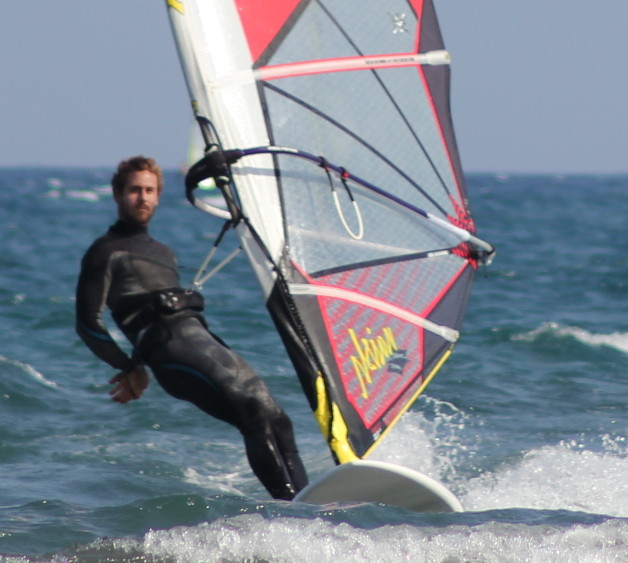
Once we have reached the point where we can consistently windsurf back and forth without arriving downwind from our starting point and where we tend not to fall very often, we are going to want to have longer sessions. This means we need to find a means of not getting tired. It’s time to learn how to use the harness.
What is the harness?
The harness is made up of a hook and the clothing part which fixes it in place in the region of the stomach or pelvis (this depends on whether it is a seat harness or a waist harness).
We use the harness to hook into the harness lines which are fixed to the boom. These will either be fixed or if adjustable length harness lines depending on preference. Important as a prerequisite to try to use the harness lines is that we already be used to sailing with a correct body position.
If we are not used to sailing with our hips forward and shoulders back, standing with a straight body, and instead get used to using the monkey stance, we will have trouble feeling comfortable in the harness as our body position will be completely different and we won’t be able to relax and feel in control. This is why I insist on the correct body position in my first post on how to windsurf.
How to use the Windsurf Harness
To hook into the harness lines it is important that we don’t alter the sails angle relative to the wind. We don’t want to sheet in as we try to hook in as we don’t want to get pulled forward at the exact moment in which we are “attaching” ourselves to the sail and are at our most vulnerable in terms of stability.
The idea is to bring the boom closer to our body by bending both arms simultaneously, preferably bringing our elbows down to our side (the higher the elbows are during this movement, the more energy we will be using and the less control we will have over the gear). At the same time we lean our pelvis forward, only enough for the hook to reach the lines. It isn’t necessary to touch the boom with our chest only to make sure we get in. If anything, going to far can hinder you as often times we separate from the boom again without having come near the harness line.
Sailing in the harness
This part is the one that takes some getting used to. Since the whole idea is to reduce the amount of energy we need to hold the sail, We want to practice to just lay the hands on the boom as if we were laying them on the keys of a piano and lean the sail forwards and backwards to stay on course. Don’t use your thumbs and attempt to have only your fingers or even only your fingertips touching the boom on the inside. Apart from using only the fingertips, try to focus on only pulling with one hand at a time: the back hand when we need more power in the sail because we are falling backwards, and the front hand to open the sail if we have too much power in the sail and get pulled to far forward.
How to hook out
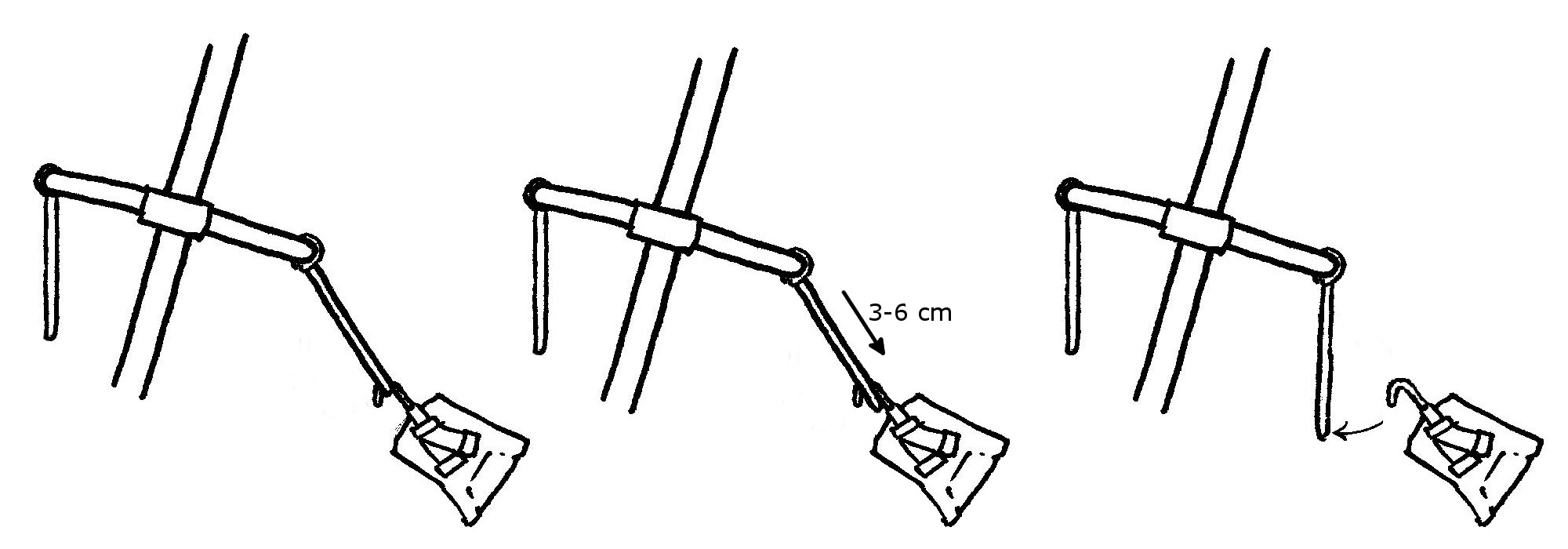
There is a reason I advised you to only use one hand at a time while sailing if you are hooked in. The reason is that using both hands is the way to eject. Basically, by pulling the boom closer with both hands brings the harness lines closer to our body, taking away the tension in them that kept them in place, and gravity doing its thing to cause the harness lines to fall out of the hook.
It is important that when we try to hook out we focus on only bringing the boom closer and don’t move our body. The most common error is to bring the boom close but simultaneously thrusting our waist forward which causes us to hook out alright. However, the problem comes when we un-arch our back to get back into the basic windsurfing position. What I have seen time and time again is that in the moment that people bring their hips back into place, the harness hook cones back down, right into the harness lines again, completely undoing the whole effort and even making the situation more dangerous as we probably ejecting for a reason, like being unstable or wanting to do a manoeuvre.
I recommend spending a while on the simulator, getting the technique down in a controlled environment before you venture out onto the water. You want to get the feeling for how far you really need to bring the pelvis forward and fine tune the relation between arm bending and pelvis lunging when hooking in; learn to relax and practice using the arms only for positioning of the boom rather than holding on when hooked in; and building the reflex motion of getting out of the harness when you feel out of control.
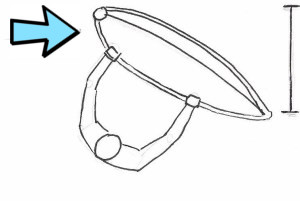
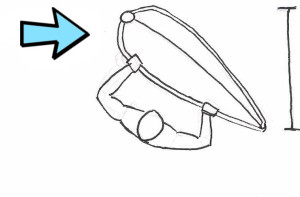
In the first post on how to windsurf I mentioned and insisted on the fact that keeping the front arm straight is an essential element in windsurfing. Keeping this rule in mid will help us in the basic windsurfing position, doing the beachstart, the waterstart, the gybe and many other maneouvres. I would even go as far as to say that this is the golden rule of windsurfing. Let me explain why:
The Golden Rule of Windsurfing
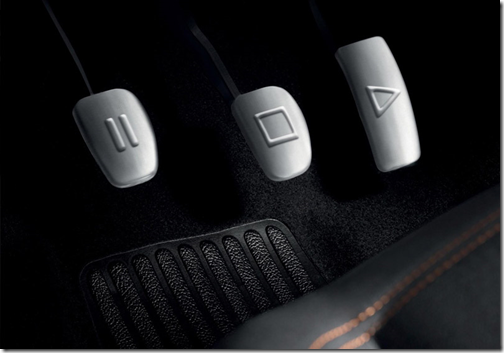
Your front and back arms leading to the boom are the equivalent to the clutch and the accelerator of a car. Naturally the angle of our body with respect to the sail has an impact on this statement but in general it is true.
Back hand = accelerator
This is a no brainer really. We pull the back hand to our body, the sail offers more surface to the wind, we get more power in the sail.
Front arm = clutch
If you hold down the clutch of your car, what happens if you step on the accelerator? Nothing. You can tread on that gas pedal all you want, as long as the clutch is held down you will not move an inch. The same goes for us if we hold the mast hand close to our body. It is basically the equivalent of opening the sail with the difference that we do not have the option of closing it with the back hand. In order for the sail to catch the wind we must offer some surface to it which is not the case if we pull the mast close to our body (depending on our course).
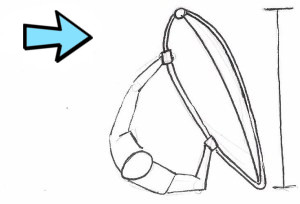
Having the front arm bent is nearly the equivalent of opening the sail, power-wise. This might be what we need if we need to take power out of the sail and we can´t open it with the back hand. An example of this is when we are hooked in the harness and we hit a gust. In that case it is easier to pull the front hand to our body than push with the back hand.
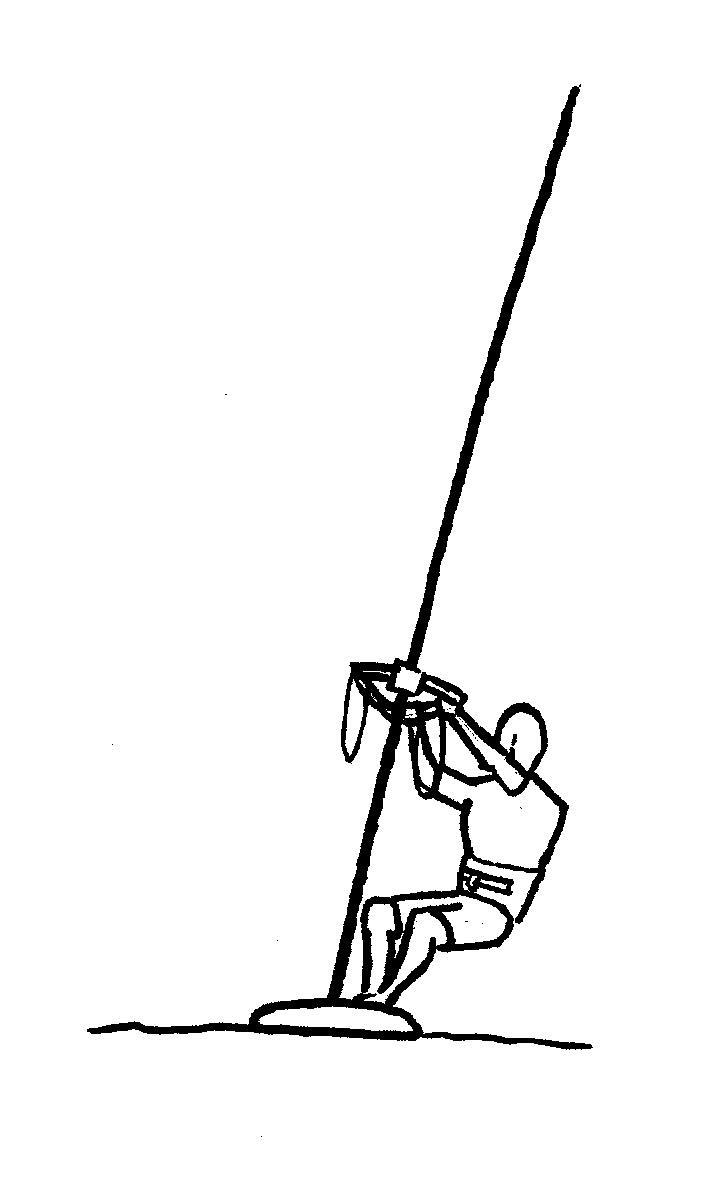
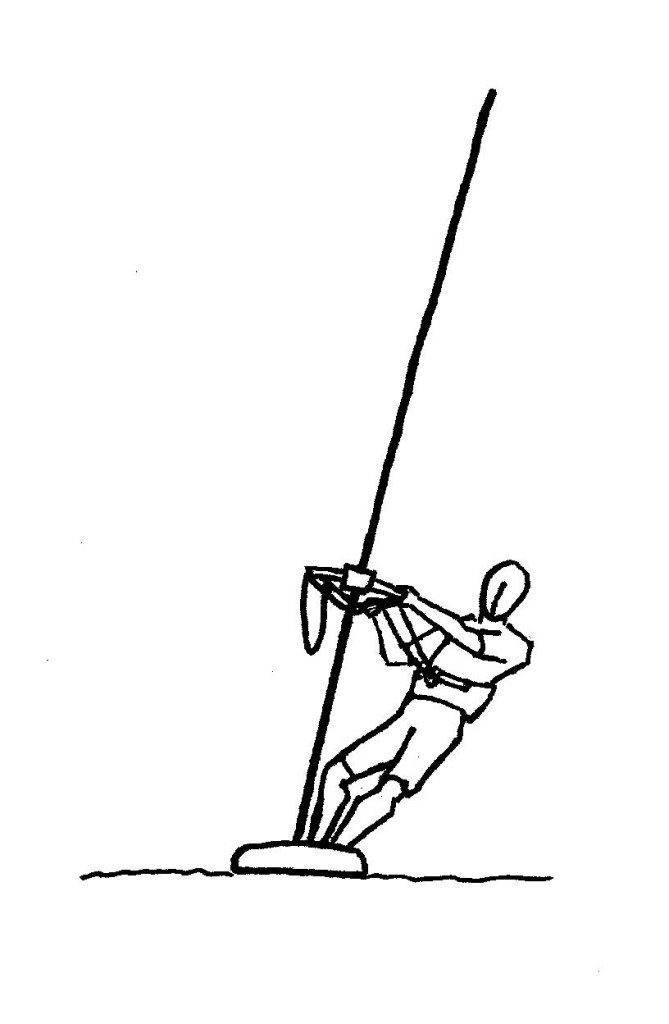
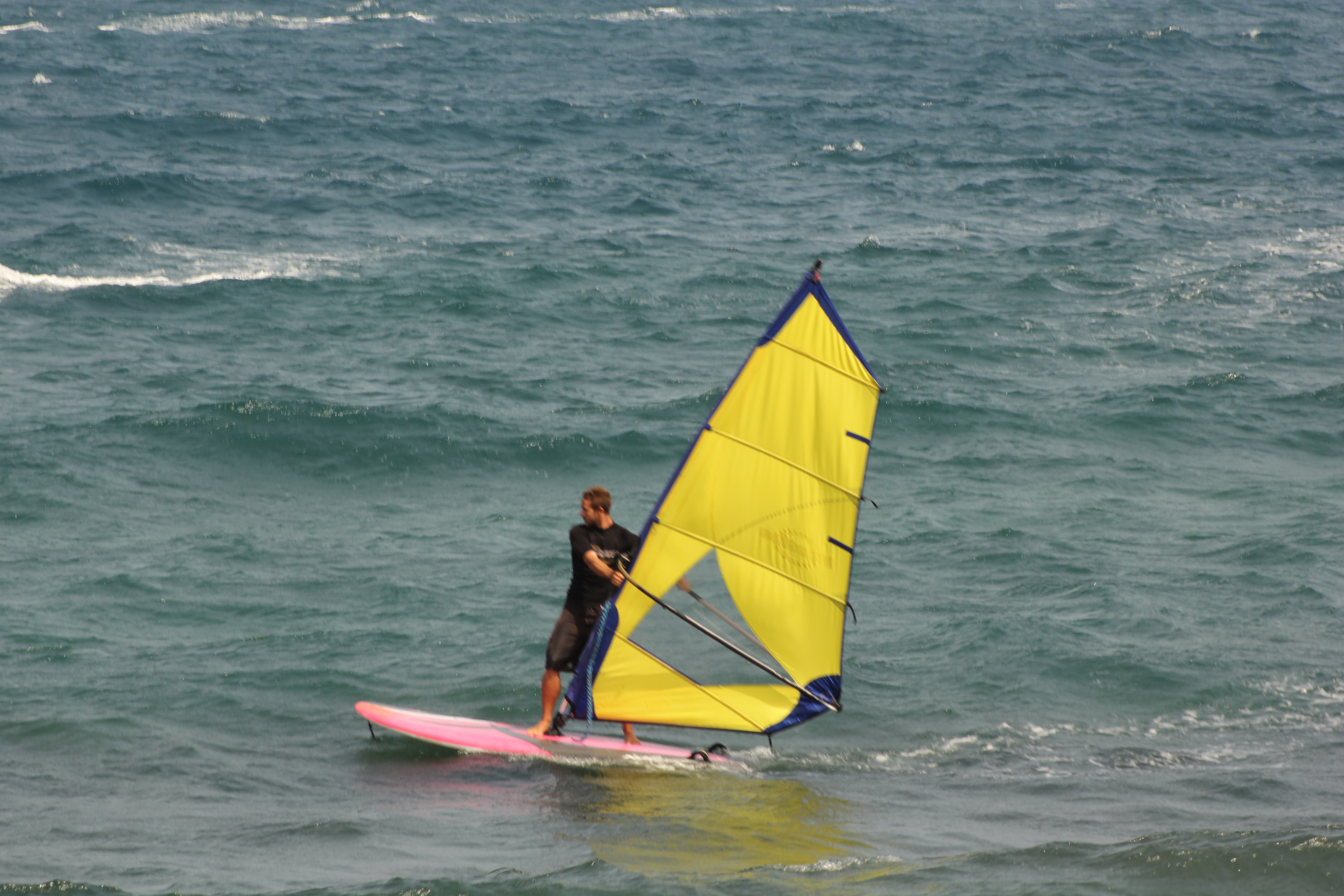
Now check out what a difference it makes to keep the front arm stretched:
Being able to turn around quickly without falling in is a pretty useful thing to know how to do in windsurfing. However, I would like to note that it is not essential to know in the initial stages of windsurfing. “Why?” you may ask. Well, basically, the way we tack and gybe with big boards and small sails is different to the way we tack and jybe with small boards and big sails and until then we can simply use the basic windsurf turn. With big boards we are going to rely a lot on the spare volume that allows us to float and have stability even when the board is not moving. This is not going to be possible when windsurfing with small boards. These boards won’t have any reserve buoyancy and so won’t float when standing still which means that the technique in tackng and jybing is very different. That being said, knowing how to tack is a useful thing to know and a good thing to practice as we solidify the foundations of our windsurfing technique. After all, it all builds the sensitivity required for the sport.
Click image to see full size
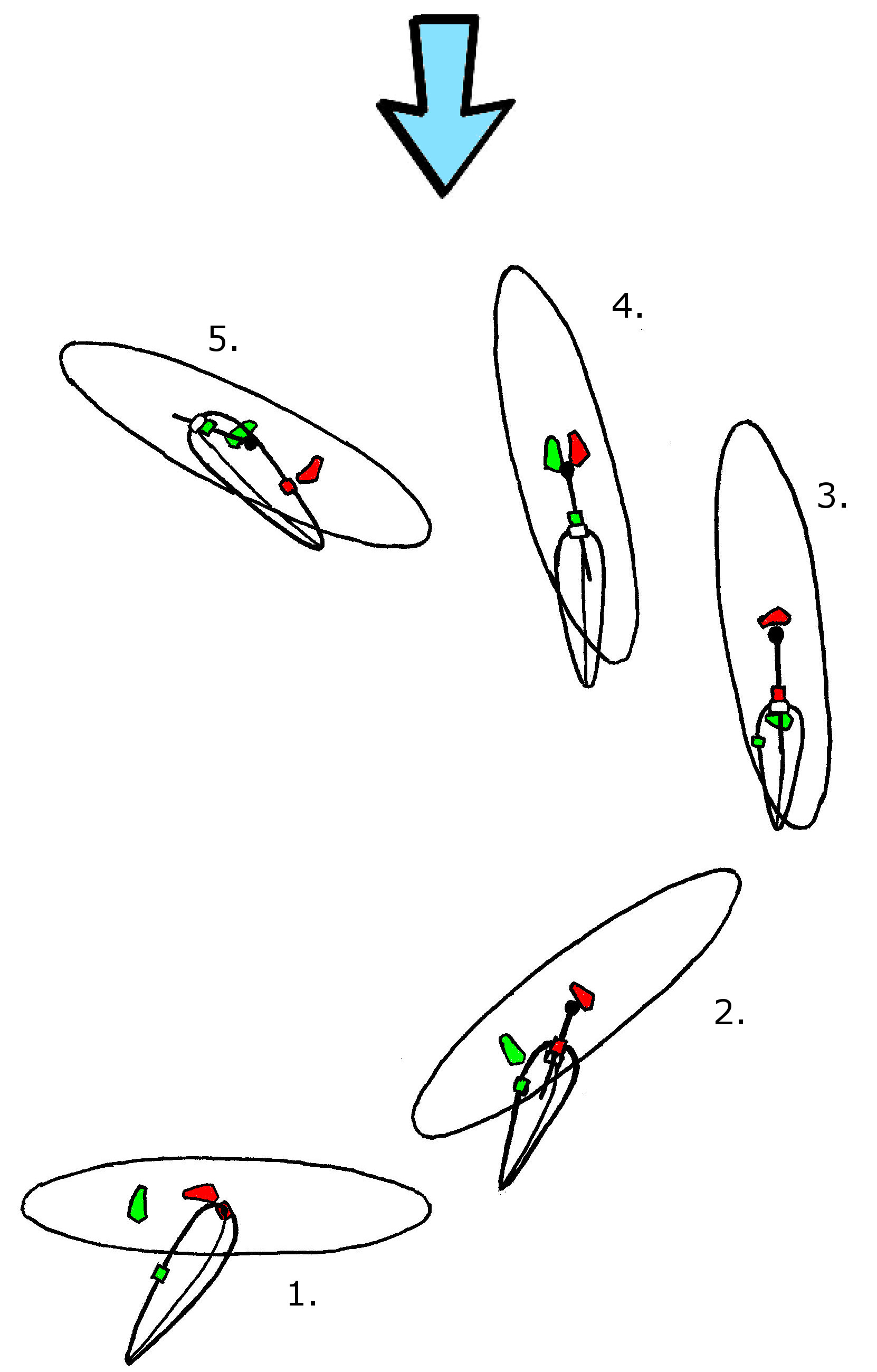
So let’s get to it. Before we start we want to keep in mind that throughout the whole manoeuvre we want to keep wind power in the sail. We want to try to keep equilibrium not by balancing on the board but by using the wind in the sail. To do this we want to keep one hand on the boom at all times, before and after changing sides. Let´s have at it step by step:
From the normal sailing position(1.) we put the front hand on the mast just below the boom and the front foot moves to just in front of the mast. As we do this the sail is lowered to the back of the board (or away from the wind) (2.) See why in the post on steering. Important to note, we move and keep our weight on the front foot throughout the whole manoeuvre.
The board starts turning into the wind. We continue holding the foot and hand positions until the sail is on the new side. A good indicator is when the foot of the sail (the lower edge of the sail) is touching our shin (3.).
Right then we need quick feet. The longer we take to get from one side with pressure in the sail to the other with pressure on the new side, the more likely it is that we lose balance and fall in.
We bring the back foot forward to where the front foot was. At the same time the back hand replaces the front hand on the mast. We keep the sail low all the way until this moment (4.).
Now we simultaneously move the previously front foot to the back and bring the mast forward to bear away from the wind (5.). The weight is transferred on to the foot that is now in front of the mast.
The board will bear away. As it does this we must start to transfer the weight on to the new back foot gradually and open the sail (sheet out) gradually so that the wind doesn’t build up too much pressure in the sail as we bear away.